Israel is small, but it holds a lot. Jerusalem’s old streets. The Sea of Galilee. The Dead Sea. The desert around Masada. Jewish visitors often come for their heritage and traditions. Christians come for the places tied to the life of Jesus. Plenty of others come for the scenery and the history.
The tricky part is planning. What do you see? How long do you stay in each place? How do you get around without rushing? This guide covers the main places, what to know before you fly, and what a guided Jeep trip is like.
Decide what the trip is for
A pilgrimage, a family holiday and an off-road adventure can all happen in Israel. They shouldn’t share one itinerary.
If Jewish heritage comes first, spend longer in Jerusalem, Safed and Tiberias. For Christian sites, focus on Nazareth, the Jordan River, the Sea of Galilee and Jerusalem. If you want landscapes, look at the Dead Sea, Masada, the Golan Heights, the Gilboa Mountains and the Negev.
Most people want a bit of each, and that’s fine. Just pick the places that matter most before you fill the days.
The places that tell Israel’s story
Israel’s history goes back thousands of years, and much of its religious meaning is tied to the land itself.
Jerusalem:
Jerusalem is central to Jewish and Christian history. It is sacred to Muslims too. You see all of that in daily life, from the old streets and houses of worship to the markets.
The Western Wall is one of Judaism’s most important sites. The Old City has four quarters: Jewish, Christian, Armenian and Muslim. Many Christians come because of the city’s link to the last days of Jesus.
Don’t squeeze Jerusalem in between breakfast and your next stop. Some religious sites have security checks and dress codes, and the rules change, so look up the latest guidance before you go.
Nazareth and the Sea of Galilee:
Nazareth is tied to the early life of Jesus, and it matters a great deal to Christian pilgrims. The Sea of Galilee appears in many events and teachings in the Gospels.
Tiberias sits on the same lake and is important in Jewish tradition. Visit these places together and you see that the north’s religious history belongs to more than one community.
The Jordan River:
Many Christians come here because of its link to the baptism of Jesus. Access and facilities vary from one official site to another, so find out which one your trip includes.
Follow the site’s rules on ceremonies, photos and entering the water. Swimming and baptism aren’t allowed everywhere along the river.
Masada and the Dead Sea:
Masada sits above the Dead Sea. Its setting is dramatic, and its place in Jewish history is a big part of why people visit. You can walk through the ruins of the ancient fortress and learn what happened there. To reach the top, you take the cable car or climb the Snake Path, depending on conditions.
The Dead Sea feels completely different. The water is so salty that you float. Keep it out of your eyes and mouth, and don’t swallow it. Rinse off afterwards. If you have open cuts or irritated skin, stay out. Follow the local safety signs.
Safed:
Safed, also spelled Tzfat, is known for Jewish learning and Kabbalistic tradition. If you want to see more than Jerusalem, it’s a good addition. It fits easily with a few days around the Sea of Galilee.
The Golan Heights, the Gilboa Mountains and the desert:
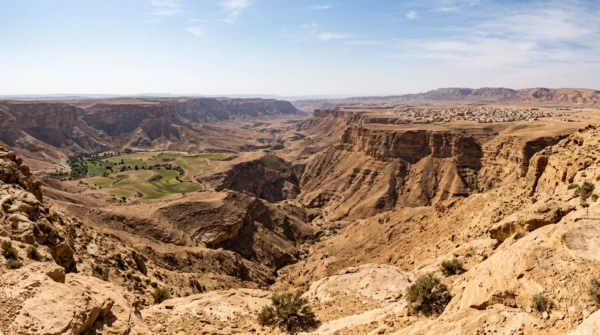
The scenery shifts fast as you cross the country. The north has green hills, mountain views and walking trails. The south has open desert, rocky ground and unusual rock formations.
The Golan Heights and the Gilboa Mountains suit a northern trip. In the south, you can explore the Negev and the land around the Dead Sea. None of this looks like Israel’s cities. It’s also where the drive itself becomes part of the trip.
Public transport, bus tour or Jeep tour?
Each option suits someone, so it comes down to your group, your budget and what you want to see.
Public transport works for independent travellers sticking to cities and well-known sights. Buses and trains save you from city driving. Remote trails and some viewpoints are harder to reach, though, and you’ll need extra transport or a separate excursion.
Bus tours let you see several famous sights with a guide and a group. They suit people who’d rather not drive. The stops and timings are usually fixed in advance, and a big coach can’t take an off-road trail.
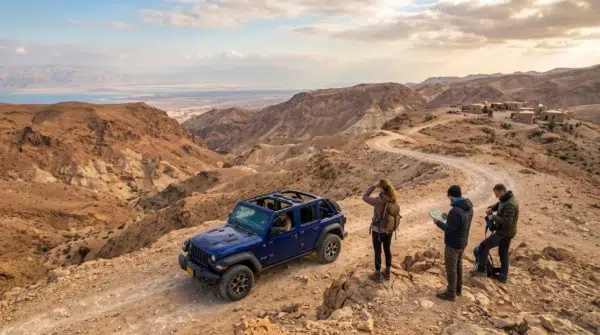
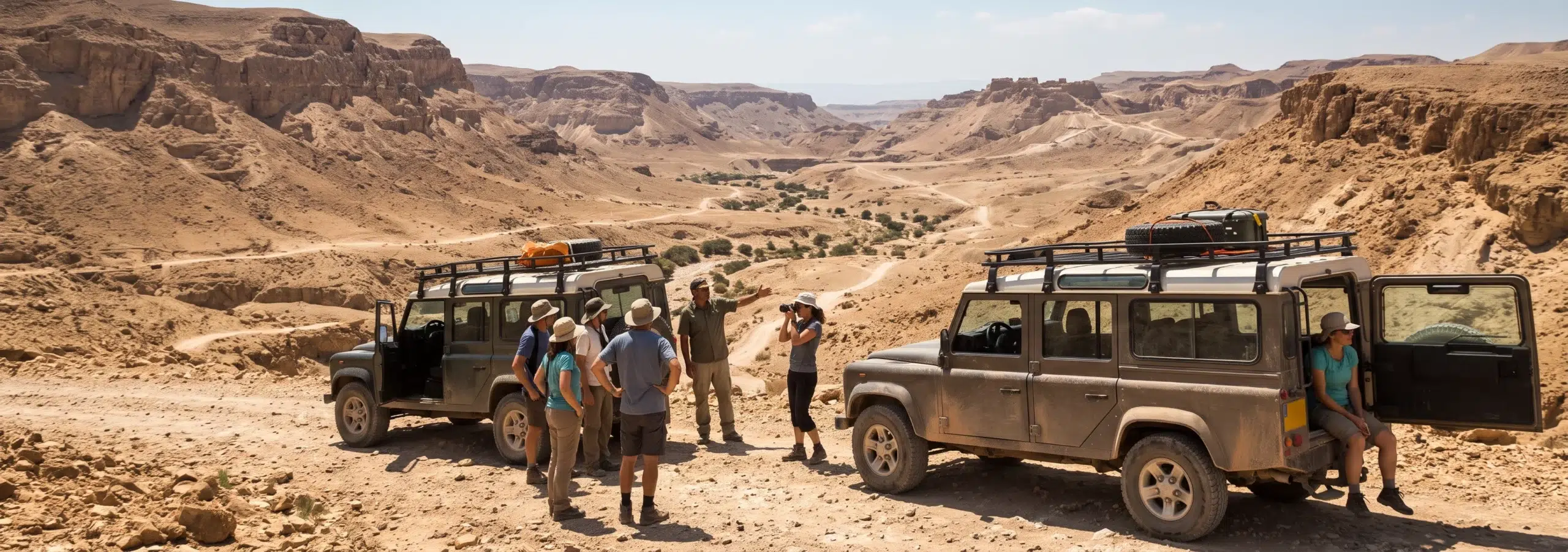
Guided self-drive Jeep tours are what we run. Your group drives its own SUVs, and a guide leads the way. You use normal roads and go off-road where the conditions allow. That gets you to scenic trails and quiet spots a standard bus tour skips.
You’ll still walk. Some viewpoints and heritage sites can only be reached on foot, and short trails are part of the day. Most people like that, since you see the place at your own speed.
Driving experience matters too. Not every route asks the same of you, and some aren’t right for first-time off-road drivers. Ask about the requirements before you pick a package.
What we organise for you
A multi-day trip has many parts: flights, vehicles, hotels, meals, routes, entrance fees, daily timing. Book them one by one and you spend the holiday fixing problems.
We run guided self-drive tours in the north, the south, the desert and across the whole country. Depending on the package, we arrange flights, accommodation, vehicles, guides, fuel, radios, first-aid equipment, picnic and coffee kits, road tolls and entrance fees.
Our trips include pilgrimage tours, Jewish heritage journeys, family trips and longer cross-country routes. Some stick to well-known sites. Others spend more time off-road. Our tours page lists them all. Inclusions, driving requirements and extra costs differ between packages, so read the one you’re interested in.
Plan around your group
A good itinerary fits the people on it. A family with young children needs more breaks and shorter walks. A religious group may want longer at certain sites. Friends who came for adventure will want more off-road driving and fewer city stops.
Think about how much walking you can handle and how long you want at each site. Ask whether everyone is comfortable driving off-road. If anyone has mobility needs or dietary requirements, tell us before you confirm.
Leave gaps in the schedule. Traffic, weather and opening hours all shift a day. A slow lunch or an extra hour at a site usually beats one more stop. We can adjust the pace, the breaks and the visits, within the plan we agree in advance.
Before you go
Entry rules. Confirm your passport validity, visa or entry authorisation, and airline requirements. Read the travel advisories for your nationality.
Clothing. Some religious sites expect modest dress. Pack something that covers your shoulders and knees.
Shoes. Ruins and trails have uneven ground. Wear comfortable walking shoes.
Sun. Bring water, sun cream and a hat, especially for the Dead Sea and the desert. Your guide will tell you how the day looks.
Local rules. Ask before photographing people, ceremonies or sensitive areas. Stay out of restricted spaces. Don’t touch old objects, and don’t assume a site allows swimming.
Driving. If you’ll drive an SUV, learn the licence, age, insurance, credit card and return requirements before you leave. Walk around the vehicle at pickup and have any existing damage recorded.
Extra costs. Travel insurance, personal expenses, some activities, tips and insurance excess cover may not be included. Get the inclusions in writing. “All-inclusive” can mean different things.
Flexibility. Weather, traffic, site access and flights can all change the plan. Listen to your guide and be ready to adapt.
One last thing. Don’t count sites. A good chat with your guide, a quiet walk through the desert or an hour spent understanding one place will mean more than another quick photo stop.
Bring it all together
A tour of Israel for a lifetime doesn’t need every landmark. It needs time at the places that matter to you, a look at the different landscapes and some understanding of the history behind them.
Some people build the trip around Christian sites. Others choose Jewish heritage, Jerusalem, the north or the desert. Many want a bit of everything. With the right route and the right transport, you can do that without rushing.
Tell us what you want from your trip. We’d love to hear it.
Frequently asked questions
What is the best time of year to visit Israel?
Spring and autumn are usually comfortable for sightseeing and outdoor travel. Summer gets very hot, especially in the desert. Look at the forecast for the regions on your list before you go.
Is English spoken in Israel?
Yes. You’ll hear it in hotels, tourist sites and most businesses that deal with visitors. It varies by region. A few Hebrew greetings go a long way. Keep your hotel details and itinerary handy.
How many days should I spend in Israel?
A short trip can cover one region or a few major sites. A cross-country trip needs more days for driving, sightseeing and off-road sections. We offer northern, southern and cross-country trips of different lengths. Pick one that gives you time to enjoy each stop.